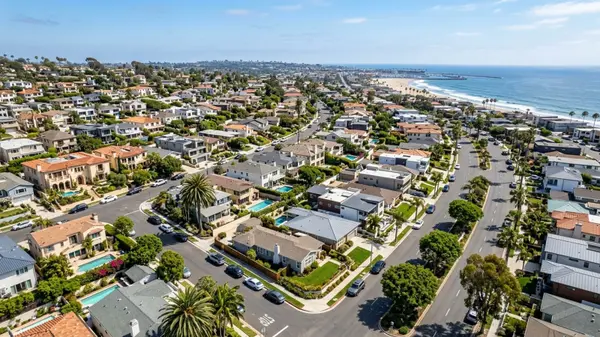

Buyer Closing Costs in Redondo Beach, CA: What to Expect in 2026
The median sale price for homes in Redondo Beach, CA sits at around $1,533,500. That number gets a lot of attention, but it's only part of what first-time home buyers in Redondo Beach will need to bring to the table. Closing costs are a separate line item entirely, and in this market, they're significant enough to deserve their own planning conversation.
Buyer closing costs in Redondo Beach represent the fees paid at the end of the escrow process - on top of your down payment, not included in it. Knowing exactly how they break down lets you structure a competitive offer and walk into signing day without scrambling for cash.
What Closing Costs Are and How They Work
Closing costs are the administrative, legal, and financial charges required to finalize a real estate transaction. They cover everything from mortgage origination to the transfer of the property title, and they're collected by the escrow company, which then distributes them to the various parties involved.
Buyers and sellers each carry their own distinct set of expenses. The split isn't arbitrary - it follows local customs that have been standard in Southern California for a long time.
Separating Closing Costs From Your Down Payment
Your down payment is the portion of the purchase price you pay upfront, reducing your loan balance. Closing costs are entirely separate fees paid on top of that. They don't lower your loan amount. They don't count toward equity. They're just the cost of getting the deal done.
Lenders evaluate your total cash to close, which combines both figures. Keep them separate in your own budget or you'll underestimate what you need.
How Buyer and Seller Fees Differ
Buyers primarily pay fees tied to securing a mortgage - appraisal, origination, and setting up future property tax and insurance payments. The exact total depends on loan type and property value.
Sellers generally handle the real estate agent commissions and certain transfer taxes. In Southern California, sellers also traditionally cover specific title insurance policies on the buyer's behalf.
Average Buyer Closing Costs in Southern California
Buyer closing expenses in California typically range from 1% to 5% of the purchase price. Statewide, the average buyer cost runs roughly $17,581 - but that number doesn't mean much in a market like Redondo Beach, where property values are considerably higher.
In a market where homes sell in about 39 days, you don't have the luxury of being vague about your finances. Get a real estimate early. Review your loan estimate carefully to see where your specific percentage lands within that 1% to 5% range.
Typical Percentages and Dollar Amounts
At lower price points, the 2% to 5% estimate is a reasonable baseline. A $300,000 property might generate $6,000 to $15,000 in buyer fees. On a $400,000 home, you're typically looking at $4,000 to $20,000. A $500,000 property moves that to $5,000 to $25,000, and a $600,000 house generally requires $6,000 to $30,000 in buyer fees.
As the purchase price climbs, the percentage often drifts toward the lower end of the range. Many administrative fees stay flat regardless of price, so the dollar amount grows while it takes up a smaller overall fraction of the sale.
Why Los Angeles County Fees Run Higher
Buying in Los Angeles County means dealing with municipal taxes that don't exist everywhere. Many local cities layer their own transfer taxes on top of the county's baseline rate, and higher property values directly inflate percentage-based fees like title insurance and loan origination.
Expect your total cash to close to exceed the statewide average. That's not a flaw in your deal - it's just the reality of this county.
Estimating Closing Costs by Home Price
The standard 1% to 5% range is a starting point, not a final answer. Your exact total will shift based on the lender you choose, how much is collected upfront for property taxes, and what you negotiate with the seller.
These estimates assume a standard conventional loan and don't factor in any credits the seller might offer.
Cost Breakdown for Different Price Tiers
The numbers scale fairly predictably: $400,000 generates roughly $4,000 to $20,000 in buyer closing costs. At $500,000, figure $5,000 to $25,000. At $600,000, $6,000 to $30,000.
The math changes significantly at the price points you'll actually be dealing with in Redondo Beach.
Calculating Fees for a Typical Redondo Beach Home
At a median sale price of roughly $1,533,500, a conservative 1.5% to 2% estimate puts buyer closing costs somewhere between $23,000 and $30,670. Homes above the median will see higher title and escrow fees on top of that.
Ask your lender for a detailed breakdown during the pre-approval process. Don't wait until you're in contract to figure out whether you have enough in reserves.
Specific Fees Buyers Pay at Closing
The final closing statement itemizes dozens of individual charges. They fall into a few primary categories - loan-related fees, property transfer costs, and prepaid homeownership expenses. Some of these are fixed. Others you can shop around for.
The escrow company compiles everything into a single document you'll receive before the final signing.
Lender and Origination Charges
Lenders charge origination fees to process and underwrite the mortgage. This category also covers the home appraisal, which the lender requires to confirm the property's market value.
Some buyers choose to pay discount points upfront to buy down their interest rate. Those points are optional, but they can meaningfully increase the total cash you need at closing.
Title Insurance Policies
There are two types of title insurance: an owner's policy that protects the buyer, and a lender's policy that protects the bank. In Los Angeles County, the buyer customarily pays for the lender's title policy. The seller typically covers the owner's policy on the buyer's behalf.
Escrow and Settlement Fees
The escrow company acts as a neutral third party - managing funds, handling paperwork, and facilitating the official property transfer. They charge a base fee plus a small percentage of the purchase price.
In Los Angeles County, that cost is customarily split 50/50 between buyer and seller.
County and City Transfer Taxes
The Los Angeles County documentary transfer tax rate is $1.10 per $1,000 of the sale value - or $0.55 per $500 of consideration.
Redondo Beach is one of five cities in the county that adds its own municipal transfer tax on top of that. The city's rate is $2.20 per $1,000, bringing the combined transfer tax to $3.30 per $1,000 of the sale price.
Property Taxes and Insurance Reserves
Lenders require buyers to prepay a portion of their annual property taxes and homeowners insurance at closing. Those funds go into an escrow reserve account to make sure future bills get paid on time. The exact amount depends on when in the year you close and the local tax schedule.
You'll also owe prepaid mortgage interest covering the days between your closing date and the first of the following month. It's not a large number, but it shows up on your settlement statement and it's worth knowing it's coming.
Who Pays What Under Los Angeles County Customs
Purchase contracts define which party pays specific closing costs, but regional customs do a lot of the heavy lifting before negotiations even start. Southern California has well-established norms for dividing title, escrow, and tax expenses, and most transactions follow them closely.
Everything is technically negotiable - but straying too far from local customs can make your offer look unfamiliar. With about 34% of Redondo Beach homes recently selling above list price, sellers here aren't typically entertaining unusual terms.
Standard Buyer Responsibilities
Under local practice, buyers pay all mortgage-related fees: origination charges, the appraisal, and the lender's title insurance policy. Buyers also fund their own property tax and insurance escrow accounts.
With 148 available homes in the market, buyers generally accept these standard costs without asking the seller to absorb any portion.
Standard Seller Responsibilities
Sellers customarily pay the real estate agent commissions for both sides of the transaction and the owner's title insurance policy. Transfer taxes are another common seller expense in Los Angeles County, though the specific division of the city and county portions can be negotiated in the purchase contract.
Seller Concessions and Credits
A seller concession is when the seller agrees to cover a portion of the buyer's closing costs - typically negotiated during the inspection period if repairs come up. Lenders cap how much a seller can contribute, usually somewhere between 3% and 6% of the purchase price depending on the loan type.
Talk to your loan officer early to confirm the maximum allowable credit before you try to negotiate one.
Estimating Your Total Cash to Close
Track your estimated closing costs from pre-approval all the way through the final week of escrow. Lenders are required to provide a standardized Loan Estimate within three days of your mortgage application. That document breaks down the expected cash to close - down payment, loan fees, and prepaid expenses all in one place.
Comparing Loan Estimates from multiple lenders is one of the most straightforward ways to find better terms.
Adjusting the Math for Cash Buyers
Paying cash eliminates all lender-related fees - no origination charges, no appraisal, no lender's title policy, no tax and insurance escrow account to fund upfront. Cash buyers in Redondo Beach still pay their half of the escrow fee, recording charges, and any negotiated share of the transfer taxes.
Without mortgage fees in the mix, closing costs for a cash transaction typically fall well below 1% of the purchase price.
Ways to Lower Your Closing Expenses
Some fees and local taxes are fixed - there's no shopping around for them. But there's more flexibility than most buyers realize, and it starts during the lender search, not after you're already in contract.
You have the right to shop for certain third-party services, like the pest inspection or - in some cases, with mutual agreement from the seller - the escrow company. Comparing providers there can generate real savings.
Shopping for Lender Credits
A lender credit lets the bank cover a portion of your closing costs in exchange for a higher interest rate. It reduces what you need at the table on closing day.
That tradeoff makes sense if you plan to refinance or sell within a few years. If you're planning to stay long-term, run the numbers carefully - the short-term cash savings come at the cost of a higher monthly payment for as long as you hold the loan.
Frequently Asked Questions
What percentage of the purchase price should I budget for buyer closing costs in Redondo Beach, CA?
Budget between 1% and 5% of the purchase price, separate from your down payment. On a median-priced Redondo Beach home around $1,533,500, closing costs tend to fall closer to the 1.5% to 2% range because of the higher property value.
Does the buyer or seller customarily pay the local city documentary transfer tax in Redondo Beach?
Sellers customarily pay the documentary transfer taxes in Los Angeles County, though the contract can specify a different arrangement. The combined rate in Redondo Beach is $3.30 per $1,000 of the sale price.
Can I negotiate for the seller to pay my closing costs in the current Redondo Beach real estate market?
You can ask, but it's a harder request to land right now. With homes spending roughly 39 days on the market and over 34% selling above list price, sellers here tend to prefer clean offers without closing cost requests attached.
Are buyer closing fees higher for a Redondo Beach condo or townhome compared to a single-family house?
The standard 1% to 5% range generally applies to both property types. That said, condos may require you to prepay different insurance policies or association dues depending on the lender's escrow requirements, so the specific line items can look different even if the overall range holds.
Can I roll my closing costs into my mortgage if I don't have enough liquid cash to close?
Most conventional purchase loans don't allow you to roll closing costs into the principal balance. You can use lender credits to cover the fees, but that comes with a higher interest rate - so it's worth understanding the long-term cost before you go that route.
At what specific point in the escrow process do I need to wire the funds for my closing costs?
You'll wire your final funds - both the down payment and closing costs - to the escrow company shortly before the official closing date. The escrow officer sends you the final settlement statement and wiring instructions once the lender clears the loan to close.
Categories
Recent Posts